



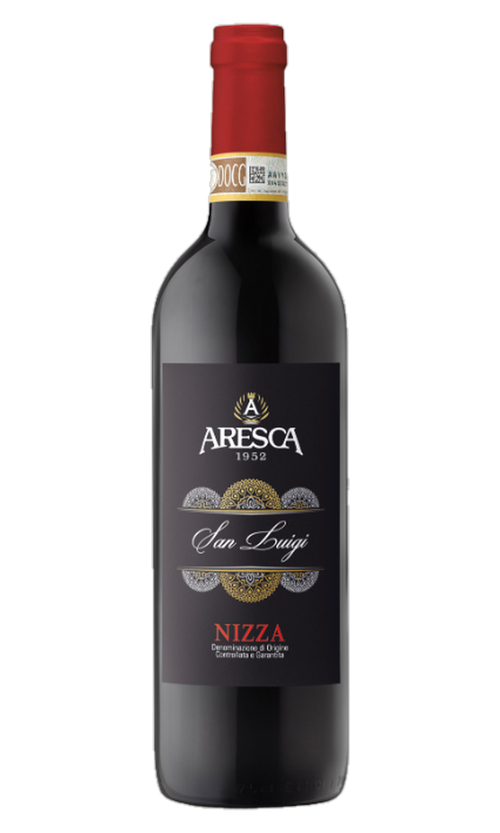
A 100% Barbera from the young Nizza DOCG, built for the cellar
- 92 pts Wine Enthusiast92 pts WE
- Curated by unrivaled experts
- Choose your delivery date
- Temperature controlled shipping options
- Get credited back if a wine fails to impress
2022 Aresca San Luigi Nizza 750 ml
Retail: $45 | ||
| $25 | 44% off | 1-7 bottles |
| $20 | 56% off | 8+ bottles |
- Curated by unrivaled experts
- Choose your delivery date
- Temperature controlled shipping options
- Get credited back if a wine fails to impress
Smart Buyers Get in Early
The Nizza DOCG sits in the prime hills of Barbera d'Asti, on the terroir judged best for the grape in all of Piedmont. It won its own designation in 2014, carved out to mark the ground where Barbera reaches its fullest expression.
Since then it's drawn the attention of Italian insiders. Forbes, Wine Spectator, and Decanter have all profiled the region, the last placing it among "the élite of Piemontese wine." The reputation has arrived faster than the prices.
Aresca's San Luigi is what the founders of the appellation had in mind when they drew its boundaries. It comes off choice hillside vineyards near the town of Nizza Monferrato, with exposures running southeast to southwest that ripen Barbera fully, and yields held to a lean seven tons per hectare.
In the cellar, Aresca treats the Barbera like fine Nebbiolo: a 20-day maceration during temperature-controlled fermentation, then a full year in barrel and six more months in bottle before release. The wine comes out with structure, depth, and the dark, spiced complexity that Barbera from these hills is built on.
Aresca is a family affair. Brothers Luigi and Piero Aresca founded it in 1952 in Mombercelli, in the hills between Monferrato and the Langhe, and the second and third generations run it now, working only Piedmont's native grapes—Barbera, Nebbiolo, Grignolino, Cortese. San Luigi carries the founder's name, and it's the bottle the family points to as its best reading of Barbera.
The result is a Barbera to buy by the case and open across the next decade—a wine whose ripe black fruit and bright acidity make it a natural at the table, from roast pheasant to braised short ribs over polenta to a greasy pan pizza with mushrooms and onions.
You might also like these wines




- You're on page