


1975 Bordeaux rarity from “gem of an estate”
- Curated by unrivaled experts
- Choose your delivery date
- Temperature controlled shipping options
- Get credited back if a wine fails to impress
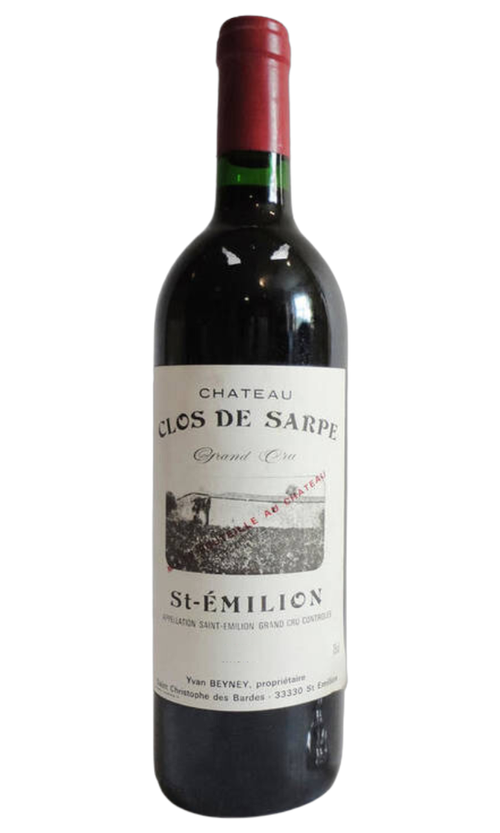
1975 Chateau Clos de Sarpe Saint-Emilion Grand Cru 750 ml
| $320 | 1-5 bottles | |
| $300 | 6% off | 6+ bottles |
- Curated by unrivaled experts
- Choose your delivery date
- Temperature controlled shipping options
- Get credited back if a wine fails to impress
A 50-Year-Old Saint-Émilion Rarity
Our wine team was recently treated to one of the most special bottles we've ever had the fortune of tasting: 1975 Clos de Sarpe Saint-Émilion Grand Cru, direct from the château's cool cellars.
We were beyond impressed—we were blown away. And we weren't the only ones: critic Jeb Dunnuck tasted this very 1975 during an unprecedented vertical of 40 vintages dating back to 1952, and came away convinced the wine had decades still ahead of it, noting that the track record of this estate bodes well for long aging.
1975 was one of Bordeaux's most famously structured vintages—a hard, tannic year built for the cellar, with the Right Bank its brightest spot. It's a near-perfect match for Clos de Sarpe, an estate whose brutally low yields and long macerations have always made wines engineered to outlive their tannins and age for decades. Half a century on, the structure of the year has resolved into something savory, complex, and alive.
Clos de Sarpe is a minuscule estate known for some of the most ageworthy wines in Bordeaux—one of the most fascinating small producers on the Right Bank. They do not make much: around 1,000 cases per year from their 10-acre vineyard.
“There is so much power, depth, and concentrated fruit that serious Bordeaux consumers need to give it a try,” wrote Robert Parker in his Bordeaux opus, about Clos de Sarpe, a Saint-Émilion Grand Cru property farmed organically by the Beyney family across three generations.
Château Clos de Sarpe is a small estate nestled on the upper limestone plateau east of Saint-Emilion, in a cooler region near Saint-Christophe-des-Bardes. This tiny vineyard of less than four hectares is planted with 85% Merlot and 15% Cabernet Franc—all farmed organically and boasting very old vines.
You might also like these wines






- You're on page