



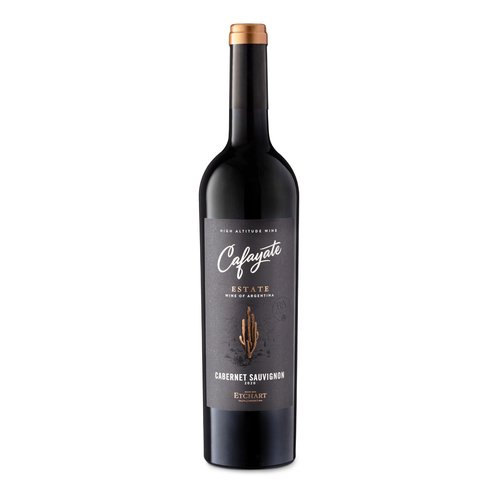
High-altitude Salta Cabernet with the structure to age for years
- 96 pts Decanter World Wine Awards96 pts DWWA
- Curated by unrivaled experts
- Choose your delivery date
- Temperature controlled shipping options
- Get credited back if a wine fails to impress
2024 Etchart Cafayate Estate Cabernet Sauvignon Salta 750 ml
| $18 | 1-11 bottles | |
| $16 | 11% off | 12+ bottles |
- Curated by unrivaled experts
- Choose your delivery date
- Temperature controlled shipping options
- Get credited back if a wine fails to impress
The Roof of Argentine Cabernet
Cafayate sits in Argentina’s far north, in the province of Salta, where vineyards climb to roughly 5,700 feet and giant cacti stand between the rows. It is high desert—more than 300 days of sun a year, almost no rain, and nights cold enough to need a jacket in summer.
That altitude is the whole story. Hot afternoons ripen the fruit fully, while cold nights lock in acidity, and the daily temperature swing can top 30°F. Thin air and intense ultraviolet light thicken the grape skins, which is where Cafayate’s reds get their deep color and firm tannins.
Bodegas Etchart has worked this ground since 1850, longer than any other winery in the valley. At more than 400 hectares, it is also the largest estate in Salta—a region that sits a 13-hour drive north of Mendoza and plays by entirely different rules.
In 1988, Arnaldo Etchart brought the Bordeaux winemaker Michel Rolland to Cafayate for what became Rolland’s first project in Argentina. The partnership put the region on the fine-wine map, and over the years that followed Rolland shaped the blueprint for the estate’s reds. The polished, structured style of its Cabernet runs straight back to that work.
Cabernet Sauvignon thrives in these conditions. The high desert gives it concentration and grip, while the elevation keeps it fresh—a combination that sets Salta Cabernet apart from the riper, softer style of warmer appellations to the south.
In the glass, expect a wine that pours dark and deep. Blackcurrant and black cherry lead, lifted by violet and edged with tobacco and licorice, with a gravelly mineral thread underneath. The tannins are muscular and the acidity keeps everything taut.
This is Cabernet with real structure—a wine with the backbone to reward time in the cellar and the depth to drink well now. It is the kind of bottle that shows why Cafayate, remote as it is, has become one of the most compelling places in the world to grow high-altitude reds.
You might also like these wines
- Member Favorite



- You're on page